Area rugs are one of the most powerful elements in interior design. They ground a room, anchor your furniture, add warmth underfoot, and introduce rich color and texture to your living space.
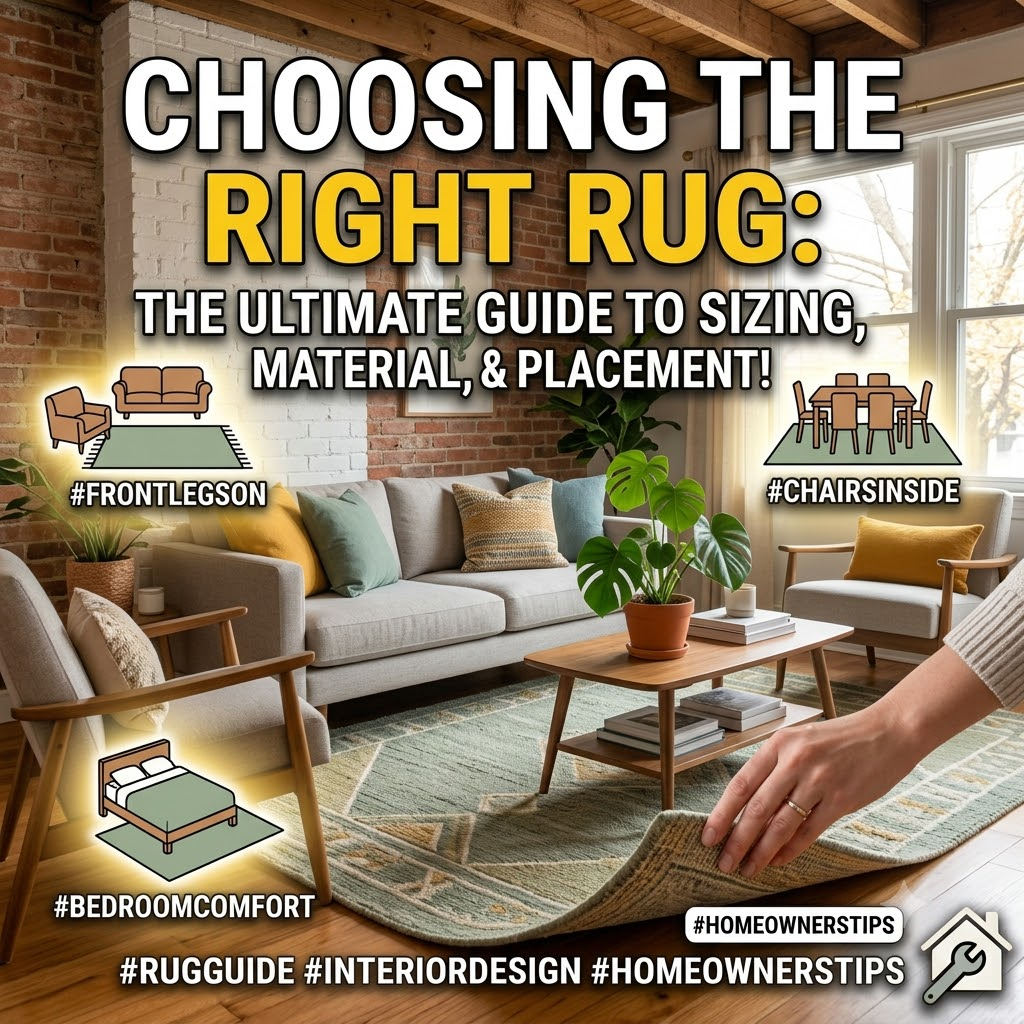
However, choosing the wrong rug can easily disrupt the balance of a room. Pick one that is too small, and the space feels fragmented; choose the wrong material, and it won’t withstand daily foot traffic.
To help you make the perfect choice, here is the ultimate room-by-room guide to sizing, materials, and placement rules.

1. Golden Rules of Rug Placement & Sizing
Before diving into room-specific details, keep these universal design rules in mind:
- The “Front Legs On” Rule: At a minimum, the front legs of your major seating furniture (sofas, armchairs) should sit on top of the rug.
- Leave a Border: Aim to leave about 12 to 18 inches of bare floor exposed around the perimeter of the rug to frame the space properly.
- Avoid the “Floating Island” Look: A rug that only sits under a coffee table without touching any surrounding seating will make the room feel disjointed and smaller than it actually is.
2. The Living Room: Creating Cohesion
The living room rug serves as the foundation for your main seating area.
Recommended Sizing:
- 8′ x 10′ or 9′ x 12′: Ideal for medium to large living rooms where all main furniture legs (or at least the front legs) can comfortably rest on the rug.
- 5′ x 8′: Best suited for smaller spaces or apartments, ensuring the front legs of the sofa sit on the edge.
Ideal Materials:
- Wool: Soft, durable, naturally stain-resistant, and luxurious underfoot—perfect for high-traffic living areas.
- Jute or Sisal: Adds incredible natural texture and neutral warmth; great for layering underneath a smaller patterned vintage rug.
3. The Dining Room: Prioritizing Functionality
Dining room rugs require careful sizing to prevent chairs from catching on the edges when pulled out.
Recommended Sizing:
- The rug should extend at least 24 inches beyond all sides of the dining table so chairs remain on the rug even when guests sit down.
- Standard Sizes: An 8′ x 10′ rug typically fits a 6-person rectangular table, while a 9′ x 12′ rug suits an 8-person table.
Ideal Materials:
- Low-Pile Wool or Flatweave: Avoid plush or high-pile shag rugs that trap food crumbs and make sliding chairs difficult.
- Stain-Resistant Synthetic / Polypropylene: Easy to clean up accidental food or liquid spills.
4. The Bedroom: Enhancing Comfort
In the bedroom, the primary goal of an area rug is to offer a soft, warm landing for your feet every morning.
Recommended Sizing & Placement:
- Under the Bed (Perpendicular): Place the rug horizontally under the lower two-thirds of the bed, extending at least 24–36 inches on either side.
- Queen Bed: Opt for an 8′ x 10′ rug.
- King Bed: Opt for a 9′ x 12′ rug.
- Bedside Runners: Alternatively, place two long runner rugs on either side of the bed if you want to keep hardwood floors partially exposed.
Ideal Materials:
- High-Pile Wool, Plush Shag, or Faux Fur: Since foot traffic in bedrooms is relatively low, prioritize maximum softness and comfort.
5. High-Traffic Zones: Entryways & Hallways
Entryways, hallways, and kitchen walkways demand durable, easy-to-clean rugs that stay securely in place.
Recommended Styles:
- Runners (2.5′ x 7′ to 2.5′ x 10′): Perfect for long corridors and gallery walls.
- Doormats & Small Accent Rugs (2′ x 3′ or 3′ x 5′): Functional for catching outdoor dirt right at the door.
Ideal Materials:
- Washable Cotton/Synthetics: Easy to throw directly into the washing machine when dirty.
- Seagrass or Polypropylene: Tough, moisture-resistant materials designed to withstand mud and daily wear.
Essential Tip: Never Skip the Rug Pad!
No matter which room or rug material you select, always use a rug pad underneath. A quality rug pad:
- Prevents slipping and dangerous bunching.
- Extends the lifespan of your rug by absorbing impact.
- Provides extra cushioning and protects hard surface flooring underneath from scratching.
Final Thoughts
A well-chosen rug ties all your interior elements together into a polished, harmonious design. By getting the scale right and selecting materials tailored to each room’s function, you can instantly elevate your home’s aesthetic while enjoying long-lasting comfort underfoot.