Lighting is often described as the secret sauce of interior design. You can have expensive furniture, beautiful wall colors, and high-end decor, but without proper lighting, a room can still feel flat, sterile, or uninviting.
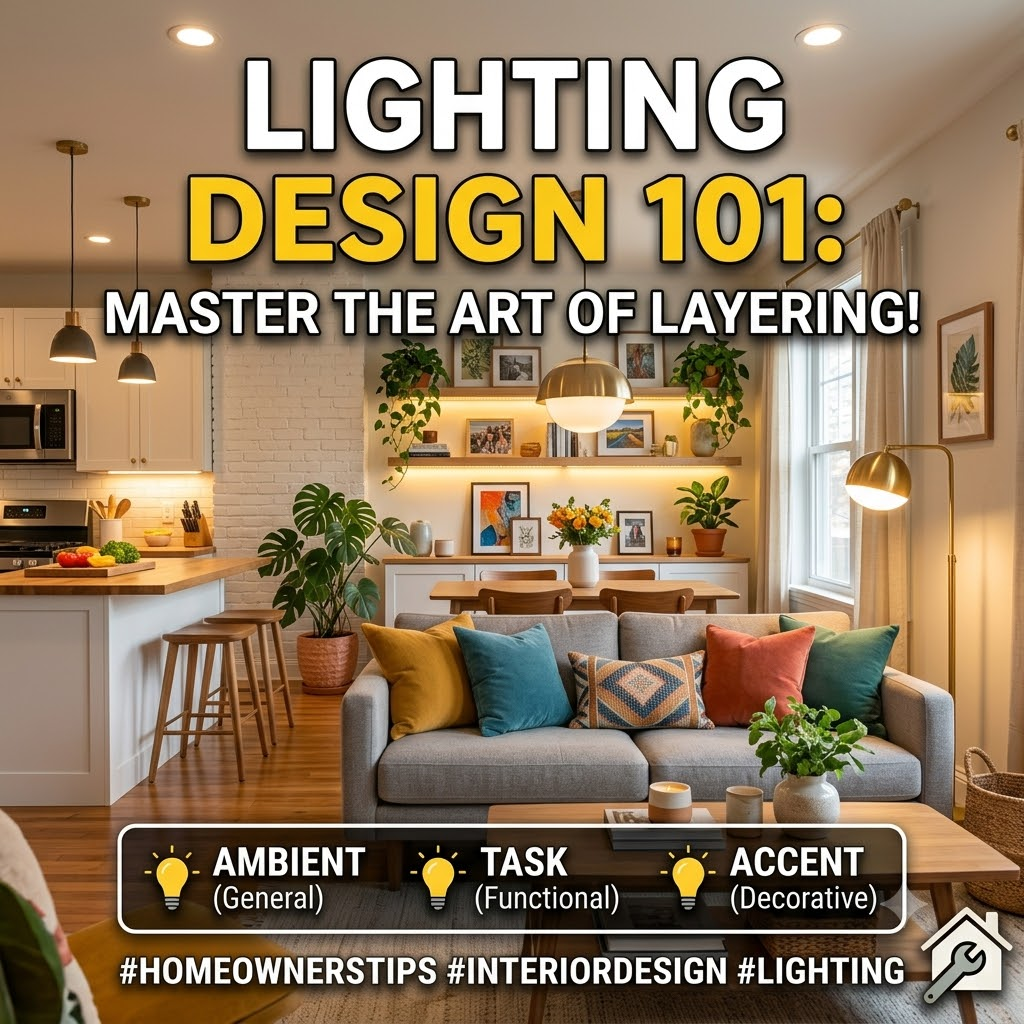
The key to achieving a warm, dynamic, and luxury-feeling space lies in lighting layering. Instead of relying on a single overhead light fixture, professional interior designers combine three fundamental types of lighting: Ambient, Task, and Accent.
Here is your beginner’s guide to mastering lighting design 101 and transforming the atmosphere of every room in your home.

1. Ambient Lighting (The Base Layer)
Ambient lighting, also known as general lighting, serves as the primary source of illumination in a room. Its main goal is to provide uniform light across the entire space so you can navigate safely and comfortably.
- What it does: Replaces natural daylight and sets the overall mood of the space.
- Common Fixtures: Flush-mount ceiling lights, chandeliers, recessed ceiling lights (can lights), and large pendant fixtures.
- Pro Tip: Always install a dimmer switch on ambient light fixtures. Dimmers allow you to soften the lighting in the evening for a cozy, relaxing ambiance or turn it up during the day for maximum brightness.
2. Task Lighting (The Functional Layer)
Task lighting is targeted illumination designed to help you perform specific activities—such as reading, cooking, working, or applying makeup—without straining your eyes.
- What it does: Directs light exactly where you need it most, preventing shadows created by ambient lighting.
- Common Fixtures:
- Kitchen: Under-cabinet LED strip lights for illuminating food prep countertops.
- Home Office: Adjustable desk lamps for reading and computer work.
- Living Room: Floor-standing reading lamps positioned beside a armchair.
- Bathroom: Vanity sconces mounted at eye level on either side of the mirror to eliminate harsh shadows on your face.
3. Accent Lighting (The Decorative Layer)
Accent lighting adds drama, depth, and character to a room. It is used to highlight specific architectural features, artwork, textures, or decorative objects, drawing the eye to focal points.
- What it does: Creates visual interest and contrast by making specific items pop out against darker surroundings. (Rule of thumb: Accent light should be roughly 3 times brighter than general ambient light).
- Common Fixtures: Picture lights above framed art, directional spotlights, LED cove lighting along floating shelves, and uplights behind large potted plants.
- Pro Tip: Use warm LED strip lights hidden underneath floating shelves or behind a wall-mounted TV to add a sophisticated, modern glow.
How to Layer Lighting in Different Rooms
To bring it all together, here is how the three layers work in harmony across main living areas:
The Living Room
- Ambient: Dimmable recessed ceiling lights or a central chandelier.
- Task: An adjustable floor lamp next to the main couch for reading.
- Accent: Picture lights showcasing a wall art gallery or LED strips highlighting open bookcase shelves.
The Kitchen
- Ambient: Pendant lights over the kitchen island and recessed ceiling lights.
- Task: Bright LED strips mounted underneath upper cabinets directly over the countertops.
- Accent: In-cabinet lighting inside glass-front cabinets displaying glassware.
The Bedroom
- Ambient: A soft, warm flush-mount ceiling fixture or a woven pendant light.
- Task: Bedside table lamps or wall-mounted reading sconces with individual switches.
- Accent: Soft backlight behind a upholstered headboard or low-level strip lighting along the bed frame.
Choosing the Right Bulb Temperature (Kelvin Scale)
Having the right fixtures is only half the battle—bulb color temperature matters just as much!
- 2700K – 3000K (Warm White): Best for living rooms, bedrooms, and dining areas to create a cozy, relaxing atmosphere.
- 3500K – 4000K (Cool White): Best for kitchens, bathrooms, and home offices where clarity, energy, and precision are required.
- 5000K+ (Daylight): Best for garages, utility rooms, or specialized craft spaces (can feel too harsh for standard living spaces).
Final Thoughts
Good lighting design doesn’t require a massive budget, but it does require intentional planning. By thoughtfully combining ambient, task, and accent light layers, you can instantly turn any ordinary room into a cozy, dynamic, and visually stunning home environment!