When it comes to decorating your home, two dominant aesthetics often claim the spotlight: Minimalism and Maximalism. While one embraces the beauty of simplicity and restraint, the other celebrates vibrant expression and curated abundance.
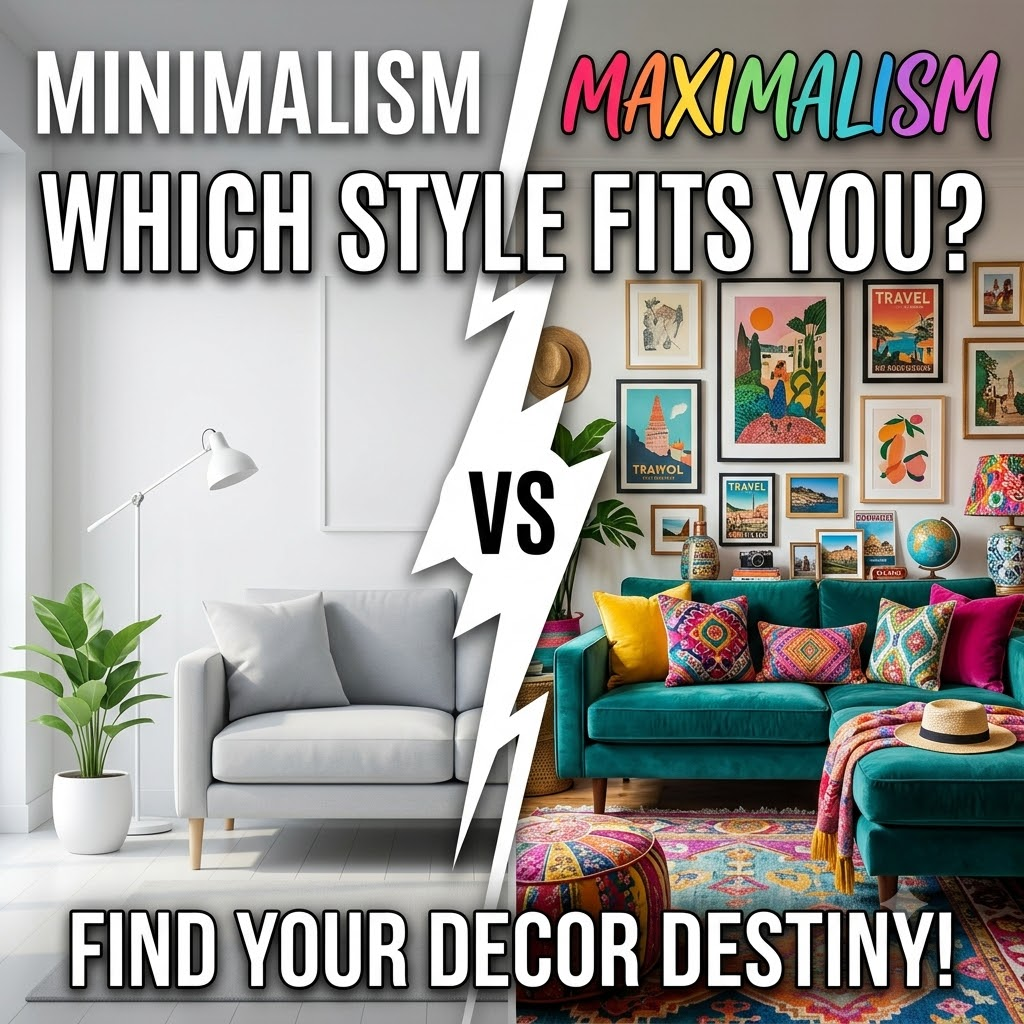
Choosing between these two contrasting styles can feel overwhelming, but understanding their core principles, advantages, and ideal spaces will help you decide which approach truly fits your lifestyle and home.
What is Minimalist Interior Design?
Minimalism is rooted in the philosophy of “less is more.” It focuses on functionality, clean lines, open space, and a clutter-free environment. Rather than filling every corner, minimalist design allows each item in the room to serve a purpose or bring genuine joy.
Key Features of Minimalism:
- Neutral Color Palettes: Whites, grays, creams, and warm earth tones create a calm and airy vibe.
- Clean Lines & Sleek Furniture: Uncluttered layouts with low-profile, functional furniture.
- Negative Space: Open areas on walls and floors are intentional, creating breathing room.
- Essential Decor: Textures (like wood, linen, and wool) replace excess decorative objects to add depth.
Best For:
- Smaller apartments or compact living rooms where space is at a premium.
- People who feel calm and relaxed in quiet, uncluttered environments.
- Homeowners who prefer low-maintenance cleaning and organization.
What is Maximalist Interior Design?
Maximalism is guided by the ethos of “more is more.” It is not about creating chaos; rather, it’s about curated richness. Maximalist homes are personal art galleries that tell a story through bold colors, varied patterns, mixed textures, and personal collections.
Key Features of Maximalism:
- Bold Colors & Patterns: Rich jewel tones, dynamic wallpaper, and contrasting color combinations.
- Layered Decor: A mix of vintage finds, travel souvenirs, artwork, books, and plants.
- Eclectic Texture Mix: Combining velvet, brass, patterned rugs, and carved wood seamlessly.
- Gallery Walls & Collections: Displaying personal histories and collections front and center.
Best For:
- Larger spaces with high ceilings that can handle dramatic visuals.
- Creative individuals, art lovers, and collectors who love showcasing their personality.
- Anyone who finds joy, warmth, and inspiration in vibrant, sensory-rich spaces.
Minimalism vs. Maximalism: A Quick Comparison
| Feature | Minimalist Style | Maximalist Style |
| Color Palette | Neutrals, monochromatic, soft tones | Vibrant, contrasting, rich jewel tones |
| Space Focus | Airiness, negative space, openness | Depth, layering, visual abundance |
| Furniture | Sleek, functional, low-profile | Eclectic, statement pieces, mixed styles |
| Atmosphere | Serene, quiet, highly organized | Energetic, expressive, storytelling |
How to Choose the Right Style for Your Space
If you’re stuck between the two, ask yourself these three simple questions:
- How do you feel in a full room? If surrounded by many objects makes you feel anxious or distracted, lean toward Minimalism. If it makes you feel cozy and inspired, Maximalism is likely your match.
- How much time do you want to spend cleaning? Minimalist spaces require less dusting and rearranging, while maximalist spaces require careful upkeep to keep curated layers from turning into messy clutter.
- Can you blend both? Absolutely! Many designers use a hybrid style known as “Muted Maximalism” or “Warm Minimalism”—keeping a clean, simple background while adding colorful art and dynamic accent pieces.
Final Thoughts
There is no “right” or “wrong” choice when it comes to interior design. Whether you find comfort in the calm clarity of Minimalism or the vibrant story of Maximalism, the best home is one that reflects your personality and functions seamlessly for your daily life.